G.R.I.D. (Global Researchers in Dialogue)
KIAT US Office 에서 지원하는 글로벌 연구자들과의 대화 시리즈 입니다. 한-미 산학연 간의 네트워크를 구축하고, 공동 R&D를 희망하시는 분들의 많은 참여를 부탁드립니다.
This is a series of Dialogue supported by the KIAT US Office with global researchers. We invite everyone interested in building networks between Korean and U.S. academia, industry, and research institutes, as well as those seeking joint R&D opportunities, to actively participate.
|
|
|
|
Foundation Models for Human-Autonomy Teaming in Automated Driving
|
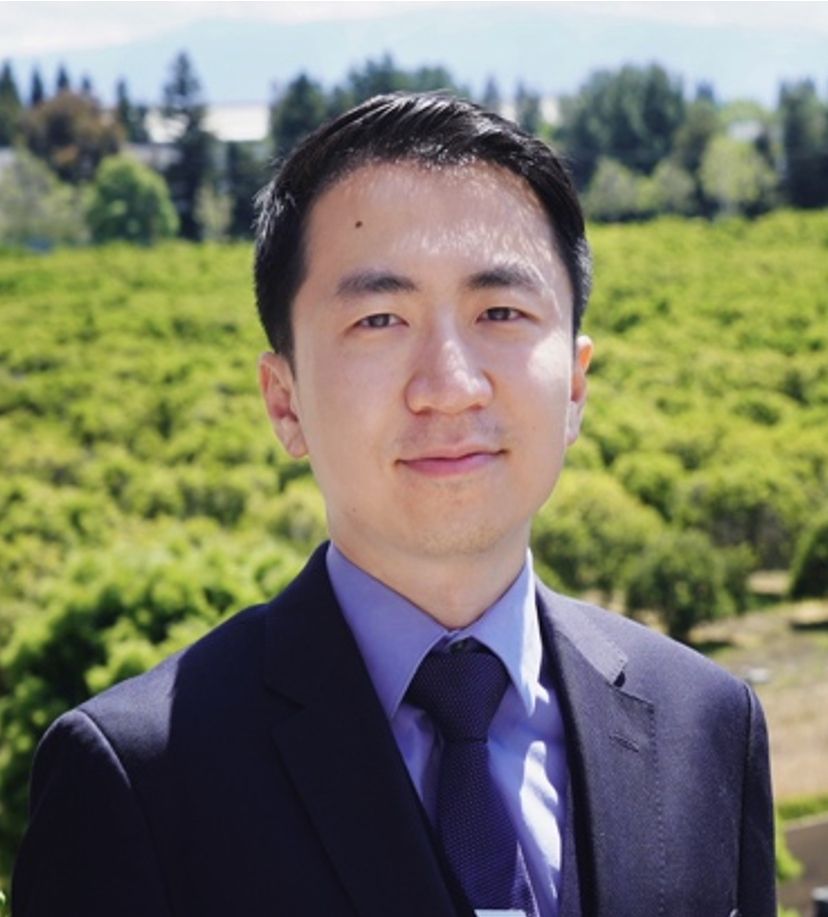
이번 웨비나에서는 퍼듀대학교의 교수이자 전 Toyota 연구원이었던 Ziran Wang 교수가 LLMs와 VLMs 기반의 인간-자율주행 협력(HAT) 시스템을 활용한 차세대 자율주행 기술을 소개합니다. 자연어 명령 이해와 시각 기반 상황 인식을 통해 인간과 차량 간의 자연스럽고 적응적인 상호작용을 구현하는 방법을 다룰 예정이며, 또한 실제 차량 실험과 대규모 시뮬레이션 결과를 통해 주행 안정성, 응답성, 에너지 효율 향상 효과를 보여줄 예정입니다.
|
|
|
|
|
Thursday, May 14, 20:10 (EST)
2026년 5월 15일, 금요일, 09:10 (한국)
|
|
|
|
- Assistant Professor at Purdue University
- Former Principal Researcher at Toyota R&D Silicon Valley
- Research areas: autonomous driving, human-centered AI, and intelligent transportation systems
|
|
|
|
This talk presents a human-autonomy teaming (HAT) approach for automated driving centered on large language models (LLMs) and vision-language models (VLMs). We explore how these foundation models enable more natural and adaptive interaction between humans and vehicles by interpreting high-level instructions, grounding language in visual context, and generating context-aware driving behaviors. We highlight practical systems, including on-board VLM-based perception and planning pipelines and LLM-driven intent alignment and decision support for real-time driving. Through large-scale simulations and real-world vehicle experiments, we demonstrate improved responsiveness to language-based inputs, reduced manual interventions, and enhanced driving smoothness and energy efficiency. This work illustrates how LLMs and VLMs can serve as a unified interface for human-centered, explainable, and adaptive autonomous driving.
|
Dr. Ziran Wang is an Assistant Professor in the Lyles School of Civil and Construction Engineering and the Elmore Family School of Electrical and Computer Engineering (by courtesy) at Purdue University. Prior to joining Purdue, Dr. Wang worked for Toyota R&D in Silicon Valley as a Principal Researcher. He also serves as Founding Chair of the IEEE Technical Committee on Internet of Things in Intelligent Transportation Systems and Associate Editor of six academic journals. His achievements were featured by mainstream media outlets, such as ABC, CBS, and FOX, demonstrated at the Consumer Electronics Show (CES) in Las Vegas, and acknowledged by eight best paper awards, the First Prize in the IEEE Shape the Future of ITS Competition, and the U.S. Department of Transportation Dissertation Award. Dr. Wang is an author of 80+ refereed publications and 50+ patent applications in the fields of autonomous driving, human-centered AI, digital twins, and intelligent transportation. He received a Ph.D. degree in Mechanical Engineering from the University of California, Riverside. He is an IEEE Senior Member.
|
|
|
|
|
|
The Global Industrial Technology Cooperation Center (GITCC) is a flagship program initiated by the Ministry of Trade, Industry and Energy (MOTIE) of Korea, operated by the Korea Institute for Advancement of Technology (KIAT).
Its mission is to strengthen Korea’s global industrial competitiveness by fostering R&D collaboration, technology commercialization, and workforce development with leading international partners across fields such as biotech, smart manufacturing, advanced sensors, robotics, semiconductors, and AI-driven technologies
|
|
|
|
|
|
The Center of Operation and Research for Industry Advancement (CORIA) at Purdue University serves as a vital hub for advancing innovation and global collaboration in Semiconductors, Batteries, and Future Mobility. In partnership with the Korea Institute for Advancement of Technology (KIAT) and the Ministry of Trade, Industry and Resources (MOTIR), CORIA bridges the U.S. and Korea, fostering industrial advancement and technological exchange. Leveraging Purdue's state-of-the-art facilities and expertise, CORIA connects academic research with industry needs to develop transformative solutions, support commercialization, and drive sustainable growth. Together, we are building a stronger global technology ecosystem.
|
|
|
|
U. of Toronto Teaching AI to Understand Images with Language: Foundations and Advances in Vision–Language Models
|
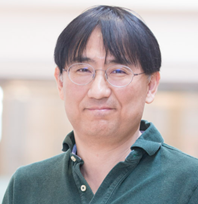
This seminar features Il-Min Kim, who will introduce Vision–Language Models that learn jointly from images and natural language, as well as the representative model CLIP. He will also discuss key challenges in real-world deployment, including biased predictions, difficulty in recognizing unseen objects, and the high computational cost of large-scale models.
The talk will further present recent research aimed at improving fairness, robustness, and efficiency in vision–language models, along with methods for enhancing their ability to capture fine-grained visual details.
|
|
|
|
|
|
- Professor and Head of ECE at Queen’s University
- B.S. from Yonsei University; M.S. and Ph.D. from KAIST
- Research interests: AI, foundation models, federated learning, and edge AI
|
Thursday, May 21, 20:30 (EST)
2026년 5월 22일, 금요일, 오전 9:30 (한국)
|
|
|
|
Korea-The Americas Industrial Technology Cooperation Office serves as a strategic hub for the Korean Ministry of Trade, Industry and Resources (MOTIR) in the Americas. This role is carried out by the Washington, D.C. office (KIAT) with the goal of strengthening industrial technology collaboration between Korea and the United States.
Email kiat.usoffice@gmail.com
Address 8229 Boone Blvd Ste 625, Vienna, VA 22182
|
|
|
|
|